Explore wasp control services
 01
Wasp Nest Removal
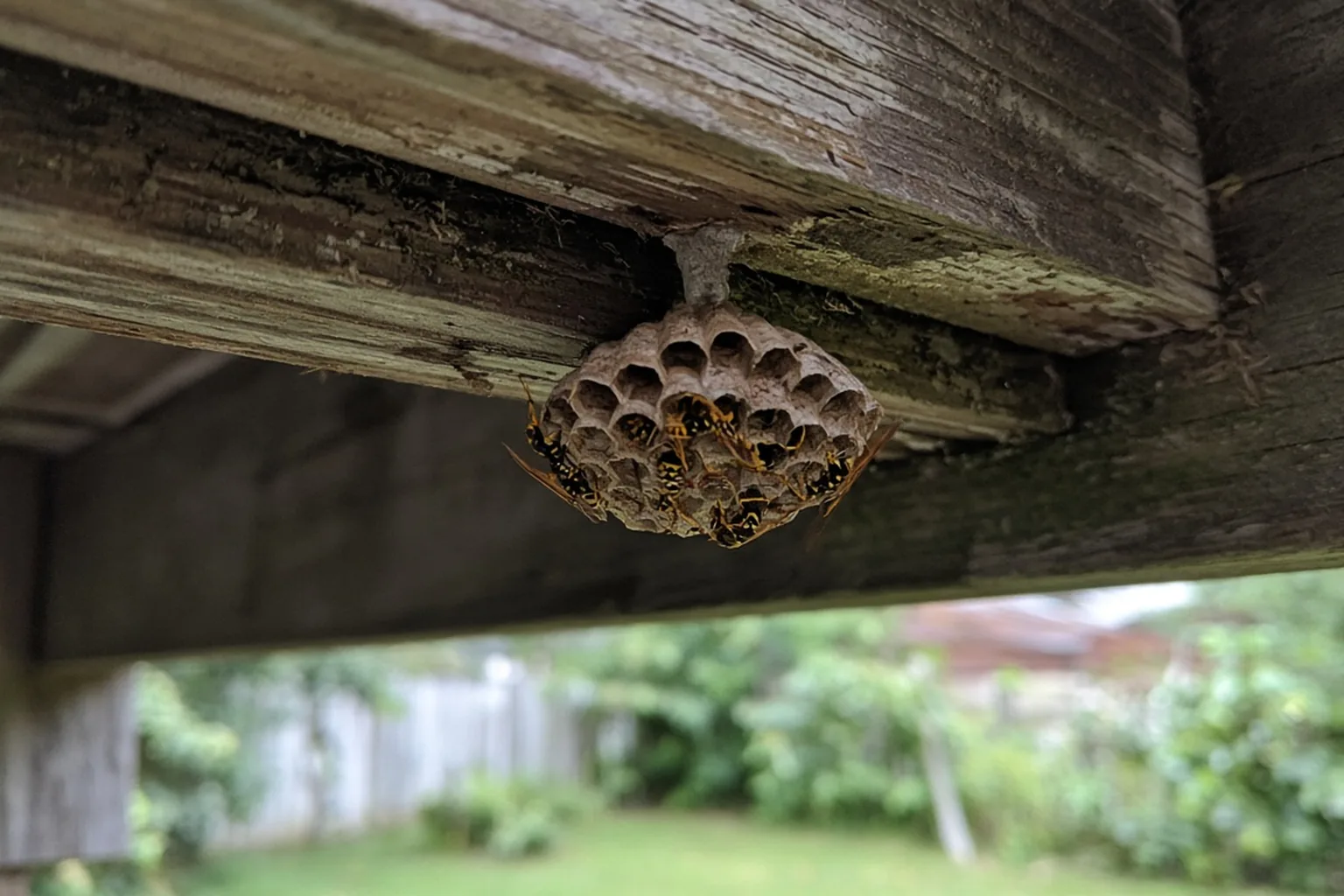
Paper wasp combs under eaves, hornet nests in trees and shrubs, and nests in sheds or attics. The nest is treated, usually at dusk, and taken down once the colony is dead.
Explore this service 02
Yellowjacket Control
Yellowjackets often nest in the ground or inside walls, where you only see the entrance. A pro treats the entry hole after dark and leaves it open until the traffic stops.
Explore this service 03
Wasp Prevention
A spring check of eaves, porch ceilings, vents and sheds catches starter nests while they're small. Sealing gaps after a nest is gone keeps next year's queen from moving in.
Explore this service 04
Commercial Wasp Control
Patios, entrances, dumpsters and play areas draw wasps in late summer. Nests are usually treated before opening or after closing, along with tips on bins and food areas.
Explore this serviceWhy do wasps keep coming back?
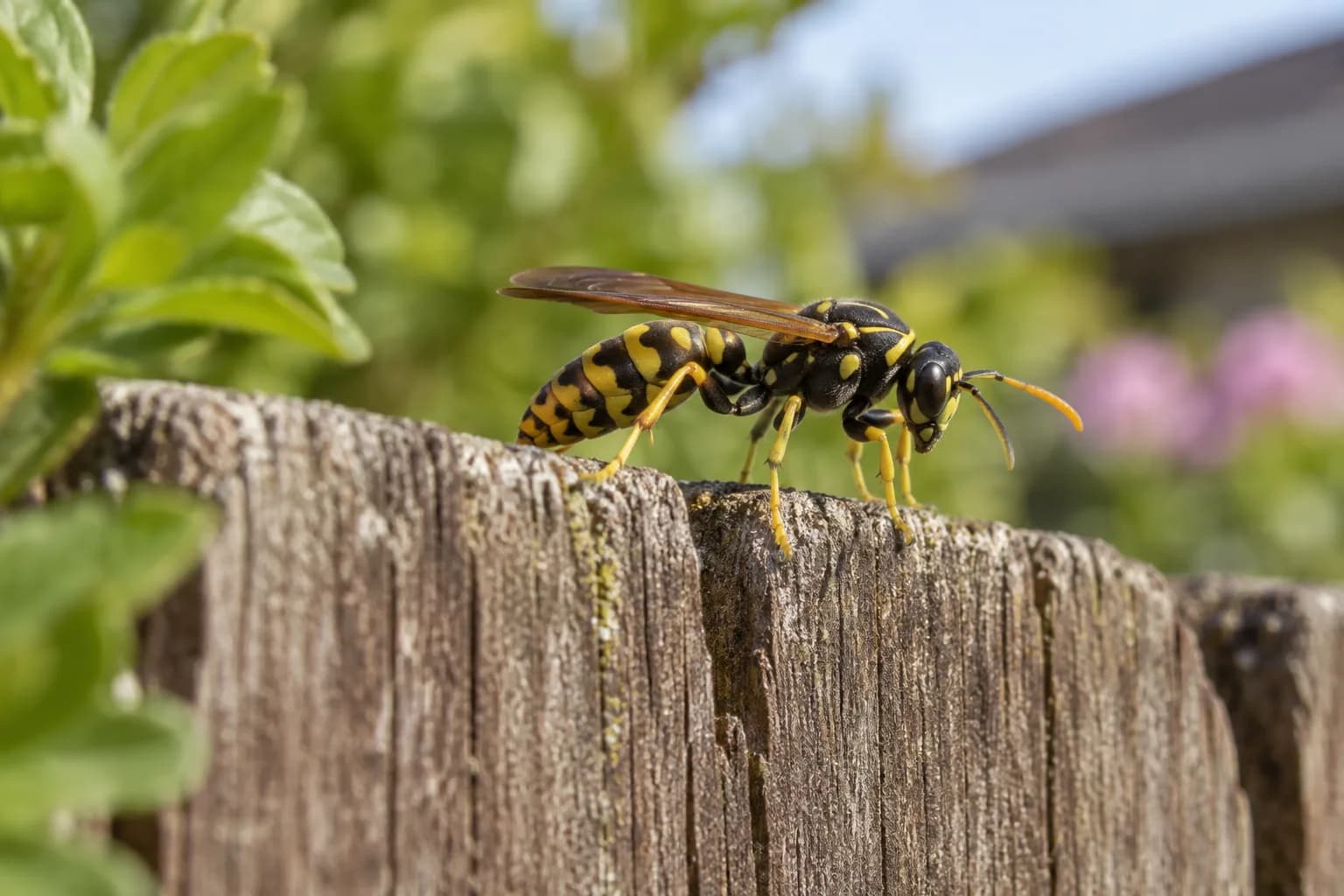
Most wasp trouble starts quietly. A queen builds a small comb under the eaves in spring, or moves into an old rodent hole in the lawn, and by late summer there are hundreds or thousands of wasps guarding it. That's usually when people notice: a sting while mowing, a steady line of wasps into the siding, or yellowjackets crowding the patio table.
The fix depends on what built the nest and where it is. A small open paper wasp comb you can reach from the ground is often a fair DIY job at dusk. Yellowjackets in the ground or inside a wall, hornet nests up high, or any nest near someone with a sting allergy are better left to a pro.
Below you'll find how to tell the common wasps apart, what each treatment involves, what it typically costs and how to keep new nests from starting. When you're ready, ask about an inspection or a quote.
What kind of wasp problem are you seeing?
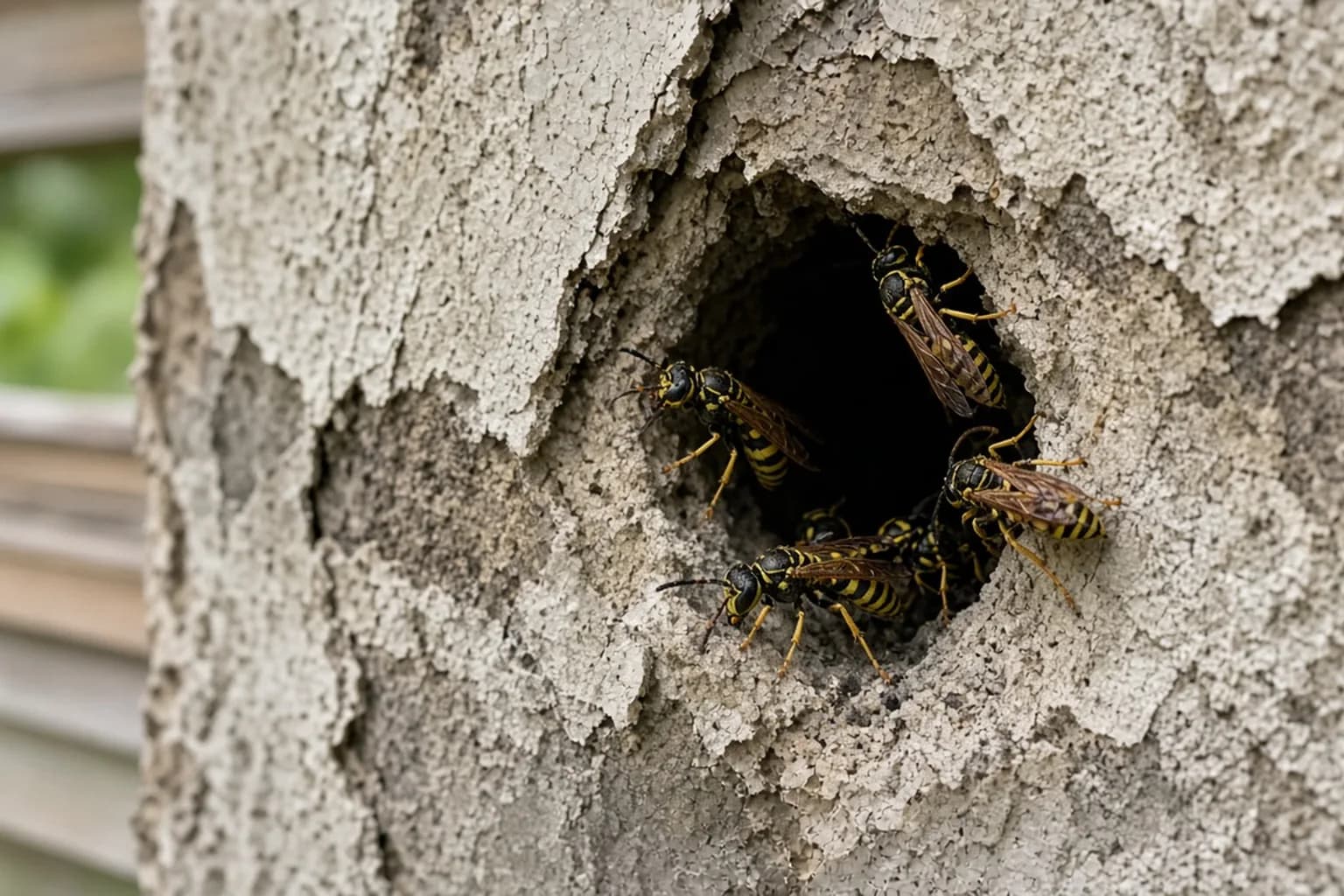
A line of wasps into one spot
Wasps flying in and out of the same hole in the lawn, gap in the siding or vent all day means a colony is behind it, even if you never see the nest.
Gray paper under eaves or in shrubs
An open, umbrella-shaped comb under a porch roof is paper wasps. A closed gray ball with one opening near the bottom, in a tree or under an eave, is hornets or aerial yellowjackets.
Buzzing in a wall or ceiling
A soft buzzing behind drywall or wasps turning up indoors near a light fixture can mean a nest in a wall void or attic. Don't seal the outside hole; that can push them inside.
What should you ask before booking?
Ask what the visit includes, how much it costs, and whether a follow-up is included. It’s also helpful to know what you’ll need to do before treatment and when you can use the area again.
Have children or pets at home? Mention them when discussing treatment. For a business, let the company know your opening hours so you can talk about a convenient time to visit.
How wasp activity changes through the year
- Spring: Queens wake up and start new nests alone, so a small comb under the eaves is easy to knock down now.
- Summer: Colonies grow fast, and ground nests start to show up when someone mows over them.
- Fall: Nests are at their largest and yellowjackets go after sweets and meat, so expect them at picnics and trash cans.
- Winter: In most areas the colony dies off and only new queens survive in sheltered spots, but in the warmest parts of the South some yellowjacket colonies keep going.
Keep exploring your options
- Nest Removal — We remove nests from eaves, attics, trees, bushes, and underground cavities — at any height, any location.
- Yellow Jacket Control — Underground yellow jacket nests are the most dangerous — we treat at night when all wasps are in the nest.
- Wasp Prevention — Residual treatment of eaves, overhangs, and common nesting sites to prevent new nests all season.
- Commercial Wasp Management — Restaurant patios, amusement parks, and outdoor venues — keep customers comfortable and sting-free.
- Contact and quote request — ask a question or request a quote.